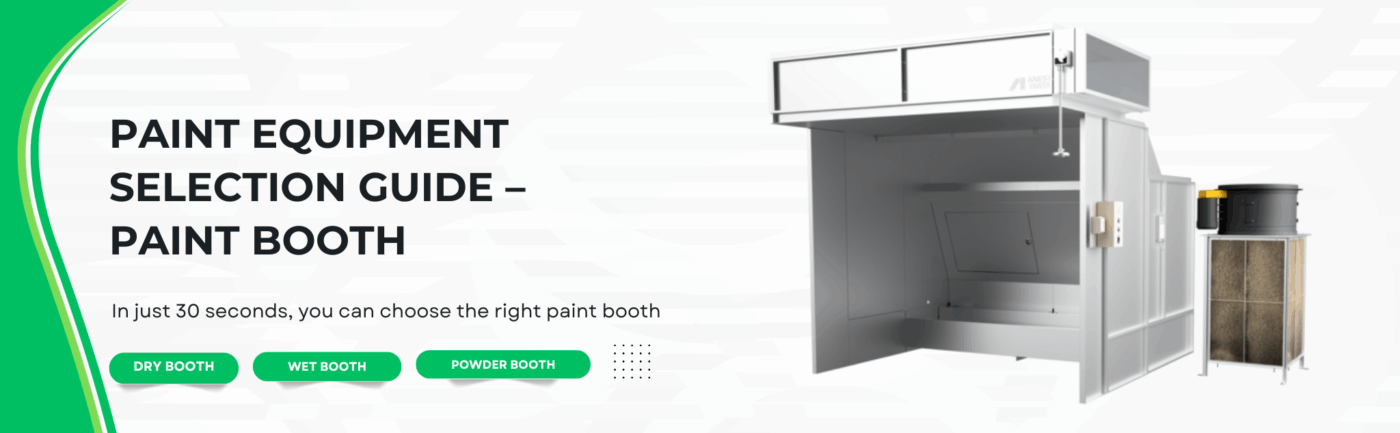
PAINT EQUIPMENT SELECTION GUIDE – PAINT BOOTH

Choosing a paint booth should not start with technical specifications.
In practice, many project delays or unexpected costs arise from operational and regulatory factors that were not clearly defined from the beginning.

This guide is designed as a quick diagnostic tool to help businesses identify their real priorities before moving into detailed design or quotation.

In just 30 seconds, you can clarify three key aspects

Maintenance

Safety

Regulatory Compliance

THREE KEY FACTORS TO DEFINE BEFORE SELECTING A PAINT BOOTH


Maintenance and Acceptable Downtime

Color change frequency, periodic cleaning capability, filter replacement cycles, and maintenance workforce availability are key factors that determine the sustainability of the system. A system may perform well technically, but it will fail if it does not align with actual operating conditions.


Safety and Explosion Risk

The use of solvent-based coatings, electrostatic painting systems, or environments with potential sources of electrical sparks directly affects explosion protection requirements and safety zoning. If not considered early, this can become a reason for a project to be halted during the approval or review stage.


Environment and Regulatory Compliance

VOC emissions, air discharge conditions, wastewater treatment, and local environmental permitting requirements are often the factors that determine feasibility even before selecting the type of paint booth.

30-Second Diagnosis

The diagnostic section consists of eight short questions designed to examine the core considerations:

Question 1: Color change frequency
Question 2: Acceptable downtime
Question 3: Use of solvent-based coatings
Question 4: Use of electrostatic coating
Question 5: Concerns about VOC emissions and nearby residential areas
Question 6: Whether powder coating is the primary method
Question 7: Wastewater treatment conditions
Question 8: Surface appearance requirements

These questions are not intended to collect detailed data, but rather to determine a feasible structural direction.

HOW TO INTERPRET THE RESULTS


The results display up to two cards:

One primary recommendation card (Dry Paint Booth / Wet Paint Booth / Powder Coating Booth)

One safety and regulatory note card (if relevant conditions apply)


The results help to:

Identify the most suitable direction based on current conditions

Recognize potential risks

Clarify the key points that need to be confirmed before investment

The results do not replace detailed technical design, but they help avoid strategic misalignment from the outset

🎨 USG – PAINT BOOTH

Operational condition analysis & paint booth selection guidance
A suitable paint booth is determined not only by the product, but also by maintenance, operational safety, environmental impact, and regulatory compliance.

⏱ It takes only ~30 seconds to clarify your real-world priorities.
Answered: 0 / 8 questions

DIFFERENCES BETWEEN TYPES OF PAINT BOOTHS


Dry Paint Booth

Suitable when operational simplicity is required, when there are no wastewater treatment facilities, or when flexible color changes are needed.
The system uses filter media to capture overspray and requires disciplined periodic maintenance.


Wet Paint Booth

Suitable when wastewater treatment facilities are available and a clean, stable painting environment is required.
The system uses water to capture overspray and generates paint sludge that must be properly managed.


Powder Coating Booth

Required when electrostatic powder coating is the primary production method.
The system focuses on powder recovery, dust control, and minimizing color contamination during color changes.

Common Reasons Projects Are Delayed or Halted

  • Insufficient conditions for air discharge or ducting
  • Failure to meet explosion protection requirements
  • Lack of a wastewater treatment solution
  • Non-compliance with VOC emission regulations

Identifying these factors early helps reduce the risk of design revisions and unexpected costs.

Checklist Before Making an Investment Decision

Before moving to quotation or detailed design, it is necessary to confirm:

  • Local environmental regulations
  • Explosion zoning based on actual operating conditions
  • Long-term operating costs (filters, chemicals, labor)
  • The ability to maintain periodic maintenance

Related Detail Pages

Based on the diagnostic results, you can explore further in the following pages:

  • Dry Paint Booth Operation Details
  • Water and Sludge Management in Wet Paint Booths
  • Design and Recovery Systems in Powder Coating Booths
  • Safety and Regulatory Compliance in Industrial Coating Systems

Each path is designed to dive deeper into the specific issues indicated by your results.

FREQUENTLY ASKED QUESTIONS

A dry paint booth uses filter media, while a wet paint booth uses water to capture overspray.

When powder coating is the primary production method of the line.

It is only mandatory when solvent vapors are present or when there is a risk of electrical sparks in the painting environment.

The environment can be cleaner, but it comes with requirements for wastewater and paint sludge treatment.


NEXT STEP

If you want to confirm feasibility before making an investment, a short discussion can help


Review potential regulatory risks


Check explosion protection requirements


Estimate actual operating costs


Identify factors that could cause the project to be halted

If these aspects are not confirmed during the design stage, changes in specifications or additional work can easily arise later

👉 Schedule a quick 5-minute consultation to clarify key points before making a decision